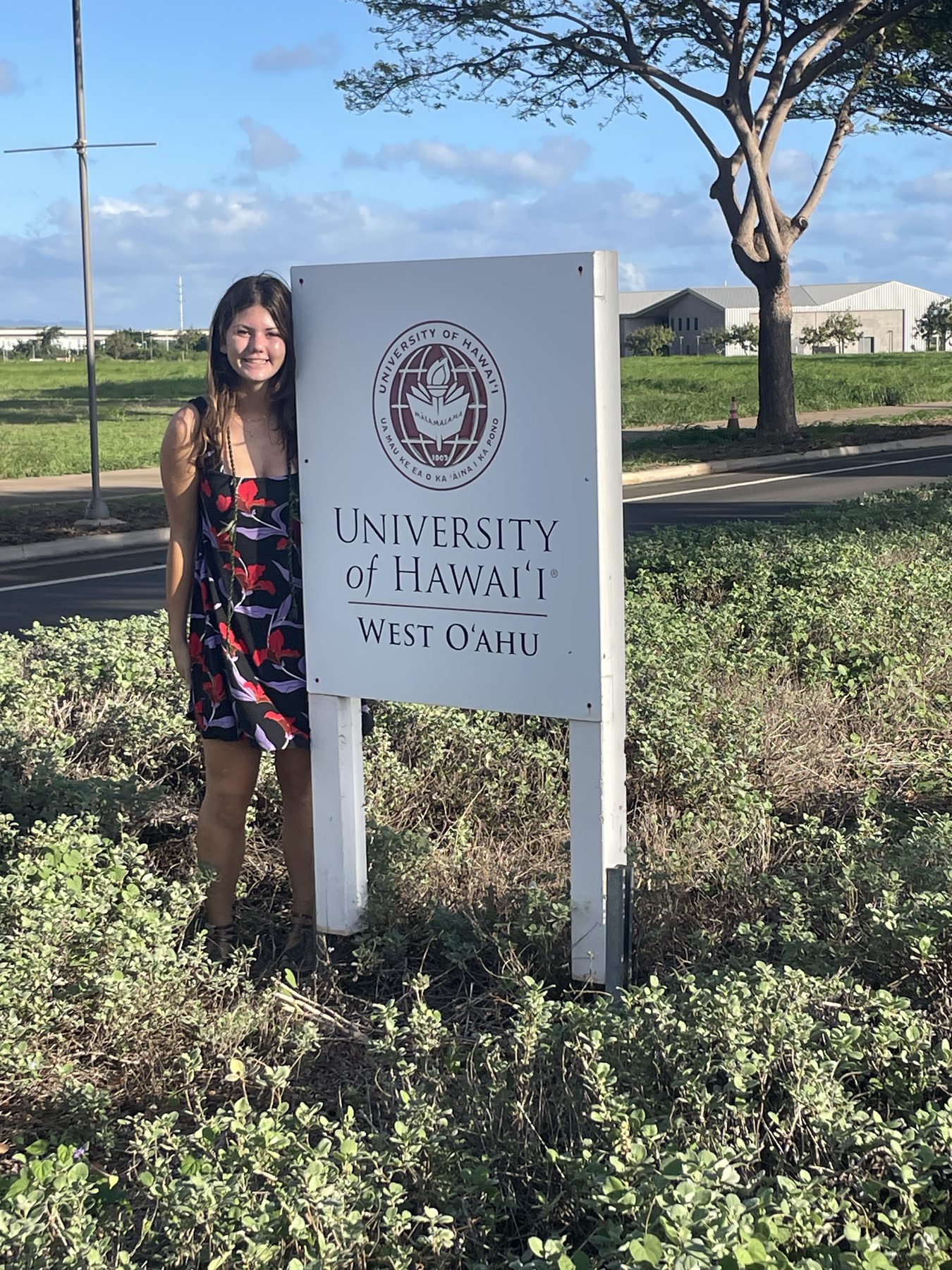
Island nations have a lot to learn from one another, but there are too few opportunities to knowledge-share. I was honored to be selected to participate as a student representative and speaker at the Hawaiʻi Food System Summit at the University of Hawaiʻi and the We Grow Hawaiʻi Summit at the State Capitol, and to bring what I had learned in the British Virgin Islands back to improve my local island home.
The annual Hawaiʻi Food System Summit at the University of Hawaiʻi is an opportunity for people from many backgrounds, including politicians, business leaders, community leaders, and students, to come together and discuss Hawaiʻi’s food systems and collaborate to make a change in the system of how Hawaiʻi feeds its citizens. As of 2026, 90% of food consumed by Hawaiian households is imported from other states. Compared to my first home, California, that statistic is staggering. Wanting to uplift local farmers and learn more about this topic in a hands-on environment, I was selected to be part of a student panel that answered questions from the audience about the younger generation’s food experiences. I built on my previous experiences working on farms in Costa Rica and in the British Virgin Islands. It was gratifying to focus on issues even closer to home that affect every other person and me in Hawaiʻi.
After that first event, I continued to work with the organization to help organize, set up, and participate in several more events, inviting students from high schools around the country for more youth educational events and even hosting a summit at the State Capitol, focusing on legislation that would promote local farms. More than just educating, this experience included pushing for meaningful change by using our voices to speak to legislators. Standing in those rooms, I saw that the food-security questions I had encountered in the British Virgin Islands were Hawaiʻi’s questions too — and that young people belong at the table when the answers are being written.