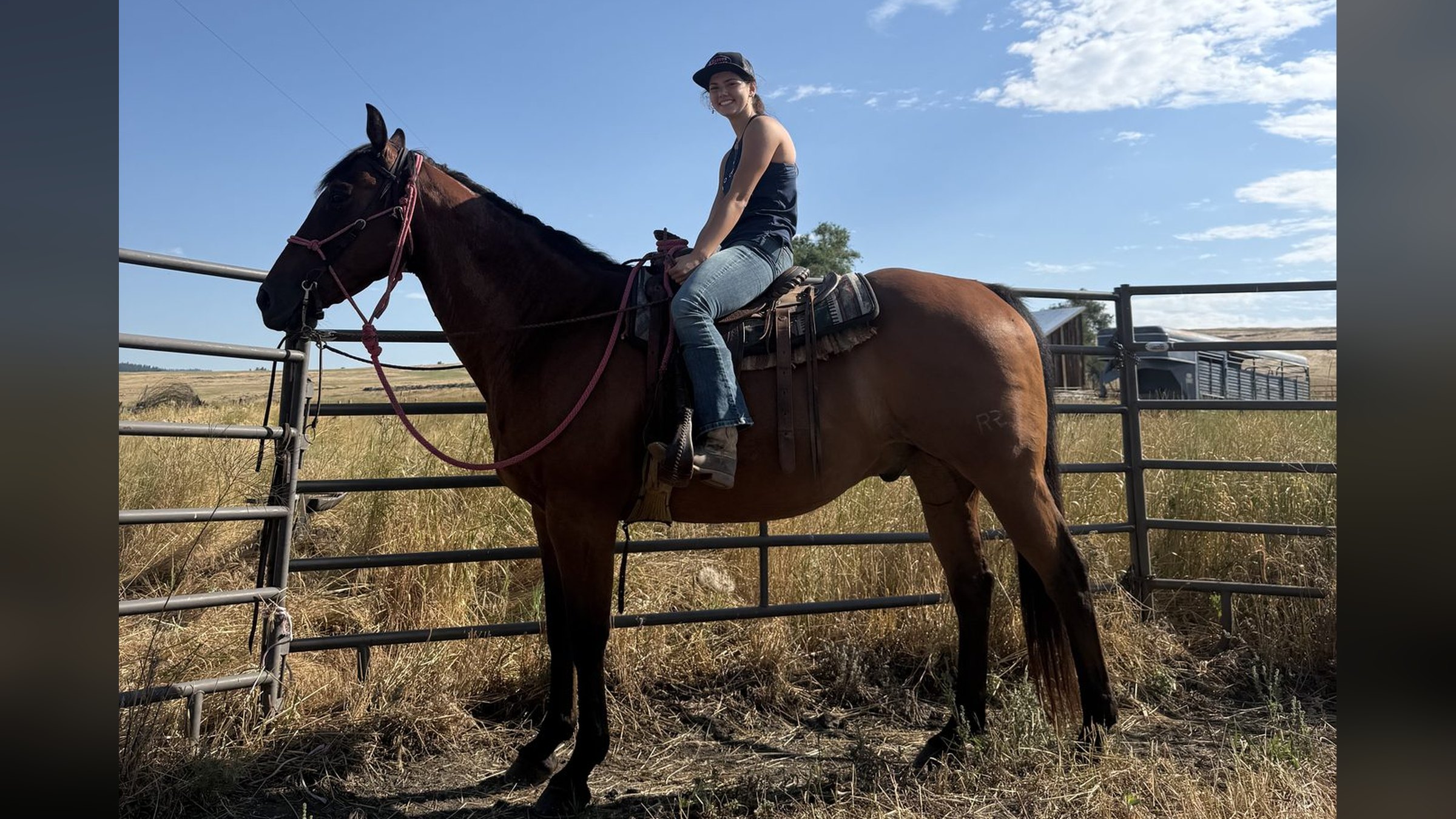
Wallowa, Oregon — a fourth-generation grass-fed ranch, rural life, and branding day.
During my internship at Carman Ranch in Wallowa County, Oregon, I immersed myself in rural American country life for the first time. I approached this experience with the goals of exploring a significant aspect of American culture and expanding my knowledge of sustainable agriculture practices, including the immense effort to get a juicy burger to my plate.
Carman Ranch, a fourth-generation grass-fed and carbon-neutral farm spanning 5,000 acres, became my home. The rolling green and brown hills of the expansive cow pastures welcomed me warmly. Every morning, I was greeted by Snip, the energetic ranch dog, who would jump on my bed to wake me up with the rising sun. The brisk, cold air of eastern Oregon warmed up as the day progressed, turning dry and hot.
The work was foreign and a definite challenge as someone more used to working on a computer in a classroom. After my first day of spending sunrise to sunset working with unfamiliar tools on fences to prevent cows from escaping and protect them from predators like wolves, my hands ached with blisters, my legs felt heavy, and I was mentally exhausted. Despite the physical challenges, I felt an immense sense of reward.
As the sun rose on day two, my determination and commitment to producing quality work grew. Alongside the manual labor, I spent every possible moment learning from Cory Carman, the ranch manager and an impressive Stanford graduate with decades of experience. Her approach to sustainable cattle farming and her passion for soil health and conservation captivated me. I was eager to learn more about her methods, which included cattle rotation, natural fertilizers, and smart irrigation, along with her genuine dedication to her animals.
As my time progressed, I became more adept with hammers, nails, and tools, feeling as if they were extensions of my own hands. Along the way, I also developed a deep affection for the cows.
Rural life
The phrase, “The people make the place,” beautifully embodies Wallowa County. In a world where urban areas often overshadow rural farming communities, Wallowa stands as a testament to resilience and connection. With a population of just 824, it is a vibrant mosaic of Indigenous culture and Western Cowboy tradition. The colorful tribal outfits harmonize with straw hats, boots, and Kimes jeans, embodying mutual respect and coexistence. At my first Powwow, I was embraced as an outsider. At the communal feast, I was generously served a plate brimming with bison, elk, fry bread, and sockeye salmon. I witnessed the rhythmic dance reflecting multigenerational joy, while the melodic drumming and singing resonated in my ears. Across cultural lines, the rugged cowboy spirit revealed the raw realities and profound love ranchers have for their craft. On my first day, I heard from numerous leaders that a deep passion for the work is essential to thrive as a rancher, and I truly believe that. Despite the challenges of maintaining a family-owned grass-fed ranch amidst the competition with Concentrated Animal Feeding Operations (CAFOs), I discovered an unparalleled joy within the heart and soul of every rancher I encountered.
Branding day
My experience at the Lightning Bolt Ranch branding pulled back the curtain on a crucial, often unseen side of the American beef industry. I even learned the recipe there for the perfect burger:
Rope
Wrestle
Castrate
Brand
Vaccinate
Tag
Release
Lightning Bolt is a true pioneer in regenerative agriculture and soil conservation, working in close partnership with neighboring ranches like Carman. In cowboy culture, community is built on mutual reliance: every neighbor shows up for each other’s calf branding, knowing that the favor will always be returned when their own herd needs tending.
Our day began at 4:30 AM, gathering over 900 head of cattle across sweeping pastures on horseback. Once the calves were separated from the mothers, the preparation moved fast: setting up vaccines, heating the branding irons, and assigning roles. Without needing a pep talk, everyone stepped into position, and the calves were released into the arena in waves.
What followed was controlled chaos: a true battle of grit, hoof, and horn against human determination. After a team of two riders on horseback successfully roped a calf, it was my turn to move. I ran down the calf, grabbed its tail, and carefully brought it to the ground, quickly restraining it with a knee to the shoulder while transferring the rope to its legs. Specialized teams rushed in to execute the vaccinations, castration, branding, and ear-notching with rhythmic efficiency before releasing the calf back to its mother.
At first, the intensity of the procedure made my stomach drop. Coming from outside this world, seeing animals handled with force felt shocking. But to the generations of cowboys working around me, this was time-tested stewardship. Despite the intensity, every single step was critical to meat production and foods enjoyed by millions of American families. Pushing past my initial hesitation, I locked in, focusing entirely on speed and precision to ensure each calf was moved through the process as quickly and safely as possible.
By the time the final calf was branded, a wave of collective pride washed over the arena. The neighborhood erupted in cheers, horses snorted, cattle dogs barked, and a wide smile broke through the dirt caked on my face. Being welcomed into a ceremony as close-knit and historic as a Wallowa Valley branding was unforgettable. It gave me a profound respect for the labor behind the food on our plates and showed me what it truly means to be part of an interconnected community feeding the nation.