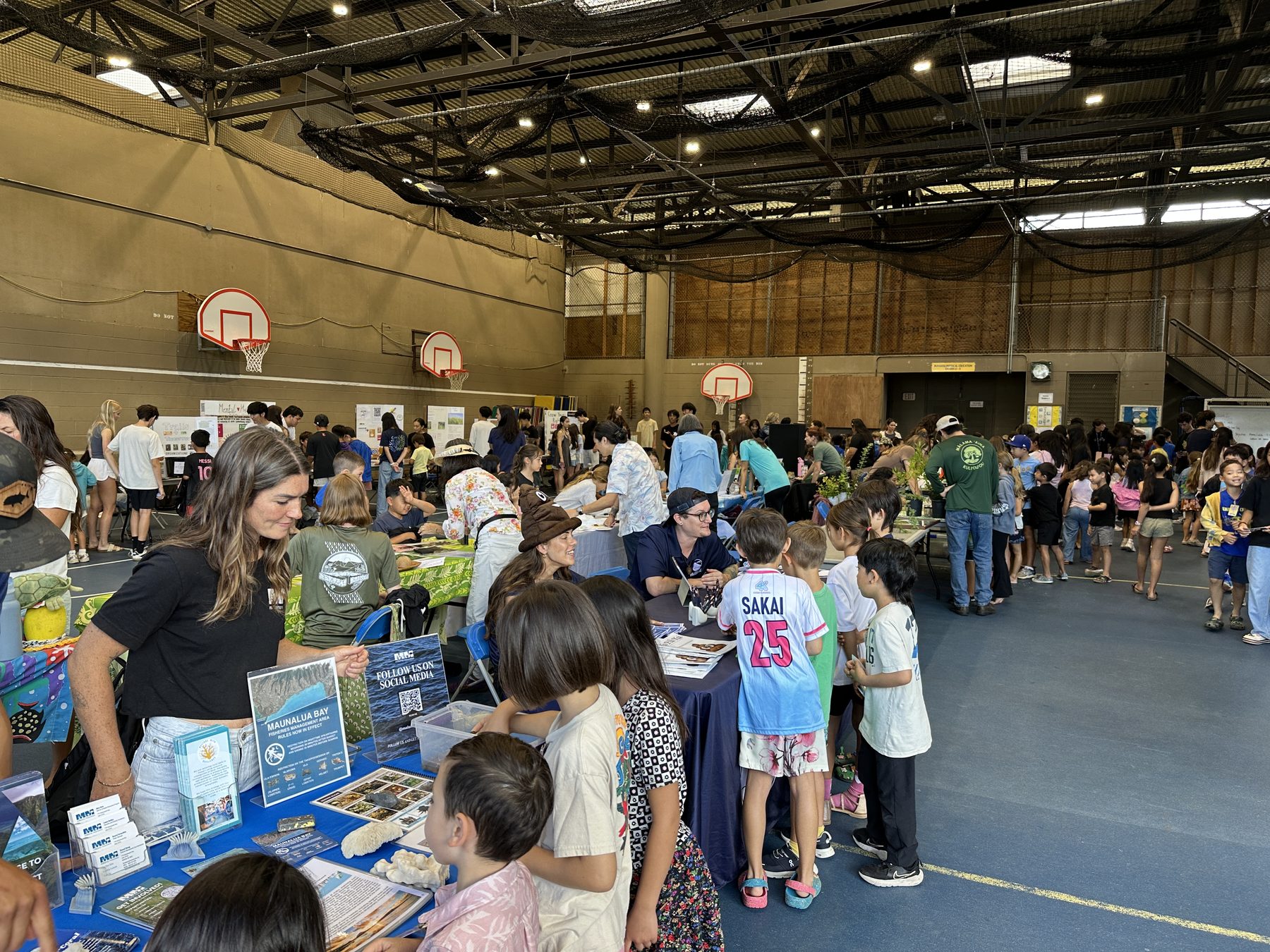
The Sustainability Fair is a year-long initiative involving various organizations aimed at educating younger Punahou students about the many ways sustainability can be understood and applied in daily life, particularly in relation to our island. This encompasses topics such as food waste, species protection, resource conservation, and more. Since my freshman year, the Sustainability Fair has been one of my greatest passions. As a member of the leadership team, I collaborated with both students and faculty to ensure the fair runs smoothly and achieves great success. Each year, the fair invites numerous outside organizations, Punahou classes, and student-led groups to present and set up booths. Students can visit these booths to learn about various environmental causes and consider joining initiatives that contribute to making the Hawaiian islands and our Earth a better place for all life.
Arts and crafts
During my time on the leadership team, we have overseen the arts and crafts section of the fair, a role that demands year-long preparation to design activities that are both educational and enjoyable for children of various ages. In my freshman year, our team utilized leftover shirts from the Punahou Carnival to create mats for kindergarten students, using fabric and recycled materials as the foundation. This project aligned with Punahou’s mission of creating “a mat that seats many,” teaching our youngest learners about inclusivity, recycling, and harnessing their imagination to minimize resource use in creating everyday items.
Sophomore year, we collected recycled bags throughout the year and tied them into a traditional aspect of Hawaiian culture: lei-making. The younger students transformed old worksheets and bags, which would have otherwise been incinerated, into ti-leaf leis and gifts for their teachers and parents, giving a lasting twist to a typically ephemeral craft.
Junior year, we gathered bottle caps and various plastic components from Punahou’s waste to repurpose them as art for the elderly and medical staff in local hospitals. Alongside the art, we encouraged the students to write kind messages. This demonstrated that even the most ordinary items, like daily trash, can be repurposed creatively, teaching an important lesson for the younger generation. Each of these projects required considerable preparation, and ultimately, they were all highly successful and received enthusiastic reviews.